HeliosForge
Forging civilisation's future at the stellar scale — one photon, one plasma stream, one self-replicating factory at a time.
Explore the public repoThe research question
Humanity captures less than 0.01% of the Sun's output, and Earth's crust cannot supply the materials of a Kardashev-2 civilisation. HeliosForge asks a precise question: what shape would a self-replicating inner-heliosphere factory take — photonic collectors, solar-wind capture, star lifting — under a stellar-stability constraint, and can it be argued with scripts anyone can re-run?
Who it's for
- Technical readers who want recomputable arguments, not spectacular renders
- Researchers and enthusiasts of stellar engineering, megastructures and self-replication
- Contributors: the repo is public (MIT) and accepts pull requests
What the programme has produced
Orbital swarm simulations
N-body up to 10,000 collectors: ring formation, zero collisions over the simulated window.
Solar-wind capture
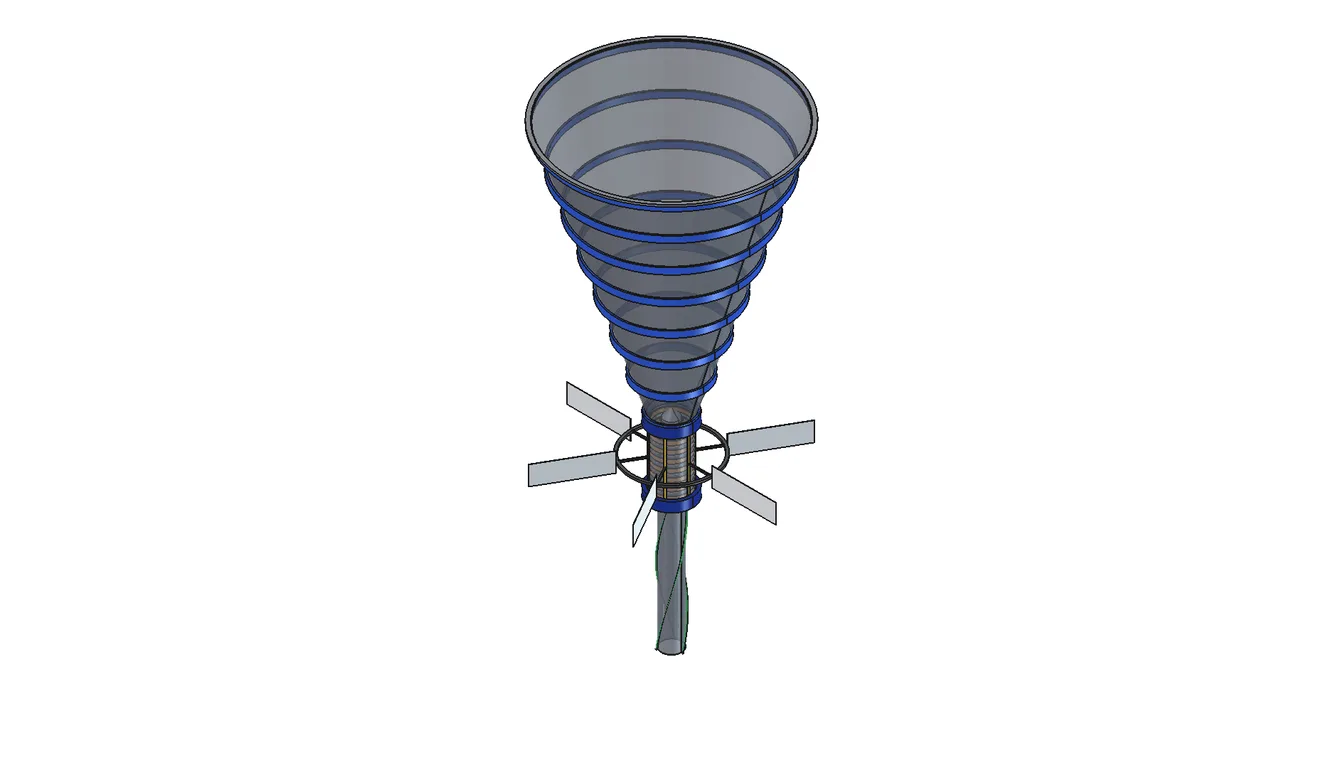
A high-efficiency magnetic-funnel design, with resistive magnetohydrodynamic corrections.
Star-lifting budget
Mass extraction capped at 0.1% of solar mass per billion years; a simulated prototype stable over 30 days.
Simulated self-replication
1→2 doubling in 7.6 years — mass-limited, not energy-limited.
Layered orbital architecture
From near-Sun loops to factories at 0.5 AU, with planetary relays — recomputed and corrected in August 2026.
HForge
An interactive pedagogical 3D simulator (local, no backend), with a bilingual FR/EN manual.
Dark Factory governance
A control loop, anomaly alerts and emergency protocols — replication freeze, cascade shutdown.
The method
Energy and matter form one loop: captured photons power matter extraction; extracted carbon and metals become new collectors; new collectors increase capture. Every link is instructed by versioned NumPy/SciPy simulations, one technical report per ticket, and an unusual honesty: the repo documents its own unresolved tensions and errata.
- Python + NumPy/SciPy for simulations, bilingual reports, CAD (FreeCAD, Blender)
- A layer of named AI agents coordinates the programme's work through shared state
- Owned status: a paper campaign — « nothing has flown », in so many words
Visuals
Status & access
FAQ
Is this serious, or science fiction?
It is owned exploratory research: every figure comes from a reproducible script, assumptions are separated from computed results, and internal contradictions are documented rather than hidden.
Has anything been built?
No — the repo says it itself: nothing has flown. HeliosForge is a simulation-argued campaign at the level of an upstream study.
Can I re-run the simulations?
Yes: the repo is public, simulations are Python scripts with versioned results, and the HForge simulator runs locally with no backend.
What does this have to do with TCKC's commercial work?
Nothing is for sale here — HeliosForge shows the TCKC method pushed to its limit: multi-agent coordination, reproducible simulation and rigorous documentation on a subject that forgives no hand-waving.
How do I contribute?
Through pull requests on the public GitHub repo. The introduction reports, in French and English, give the context needed to argue a contribution.
Explore the programme
Reports, simulations and 3D models are public. To discuss it, get in touch.